Most visitors arrive in Valencia knowing one dish. Paella is the right place to start, but it is only the first page. This Valencia food guide covers what comes after: the eel stew of the rice fields, the black rice of the port, the noodle dish born on a fishing boat, the mid-morning sandwich that is almost a religion, and the produce of the farmland that surrounds the city. For each, we suggest where to taste it.
Why Valencian food is different
Valencia sits between three larders. To the south is the Albufera, a freshwater lagoon ringed by rice fields. Around the city is L’Horta, an irrigated market garden farmed since Moorish times, still crossed by its old canals. In front is the Mediterranean, with the fish and shellfish of the Gulf of Valencia. Nearly every traditional dish draws on one of the three, and the best on all of them.
The cooking is direct: good olive oil, garlic, paprika, saffron, and very few tricks. It changes with the season. A Valencian will tell you what is good this week before telling you what is famous.
Rice, beyond paella
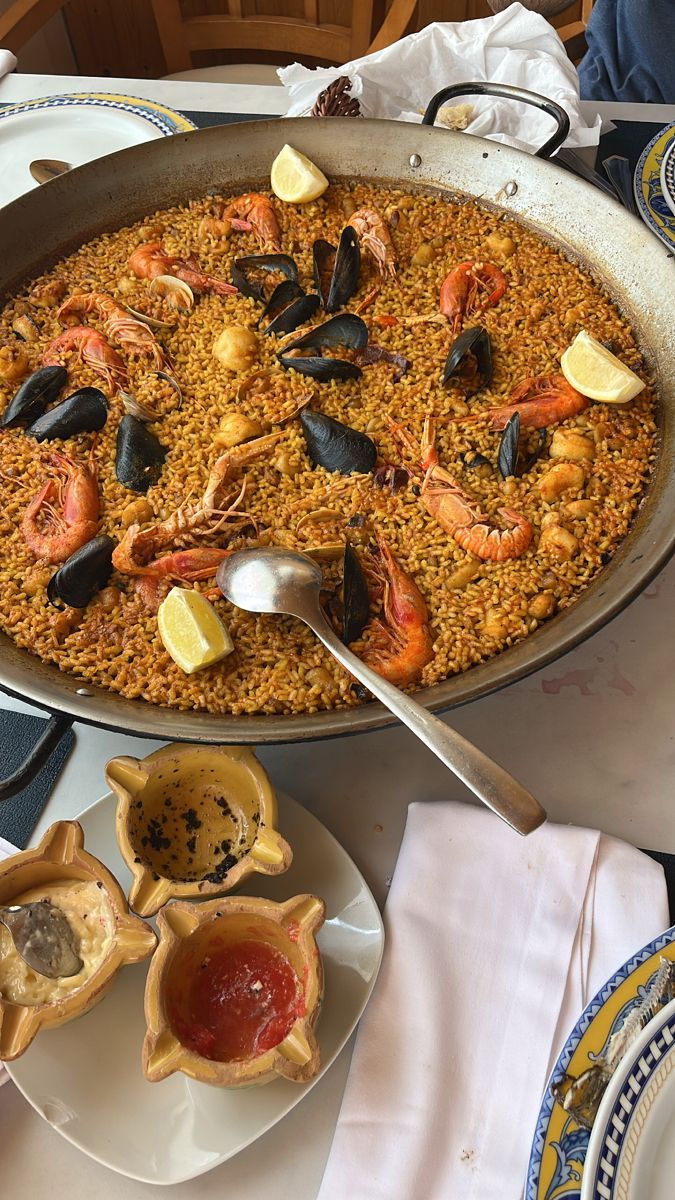
Rice arrived with the Moors and has been grown in the Albufera for more than a thousand years. Paella valenciana, with chicken, rabbit, flat green beans and white lima beans, is the original, and it deserves its own guide: read ours on authentic paella in Valencia. Here are the other rices you will meet.
Arròs negre
Black rice, cooked in a pan like paella, with cuttlefish or squid and their ink, which turns the whole dish glossy black. It is served with allioli, a sharp garlic emulsion, spooned on top. The flavor is deep and of the sea; it is one of the most rewarding dishes on any Valencian menu.
Arròs a banda
“Rice apart.” Fishermen once cooked their catch in a pot, ate the fish separately and used the rich broth to cook rice. Today the rice comes on its own, intensely flavored by the stock, again with allioli.
Arròs del senyoret and arròs al forn
Senyoret, “the gentleman’s rice,” is a seafood rice in which everything is already peeled, so you never have to touch a shell. Arròs al forn is a world away: oven-baked rice with pork ribs, chickpeas, black sausage and a whole head of garlic, a dish of the city’s homes in winter.
Fideuà
A seafood dish made with short, thin noodles instead of rice, cooked in a paella pan until the ends curl up and turn crisp. The story goes that it was invented in Gandia, on the coast south of Valencia, by a ship’s cook in the early 20th century. Order it with allioli and a squeeze of lemon.
The dishes of the Albufera and the coast
All i pebre
The classic dish of the Albufera, from the fishing village of El Palmar: eel stewed slowly with garlic (all), paprika (pebre), potatoes and sometimes a chili. It is rich and red, and the eel is softer than most people expect. It is best eaten in El Palmar itself, after a morning on the lagoon; see our guide to the Albufera Natural Park.
Clóchinas and tellinas
Clóchinas are the small, intensely flavored local mussels, steamed with a little lemon and pepper and eaten in early summer. Tellinas are tiny wedge clams from the sandy beaches south of the city, cooked in moments with garlic and parsley. Both are ordered as a starter before rice.
Esgarraet
A cold dish of roasted red peppers torn into strips (esgarrar, “to tear”) with salt cod, garlic and plenty of olive oil. It is served as a starter, with bread, and it captures the Valencian way with very few ingredients.
Almuerzo: the mid-morning ritual
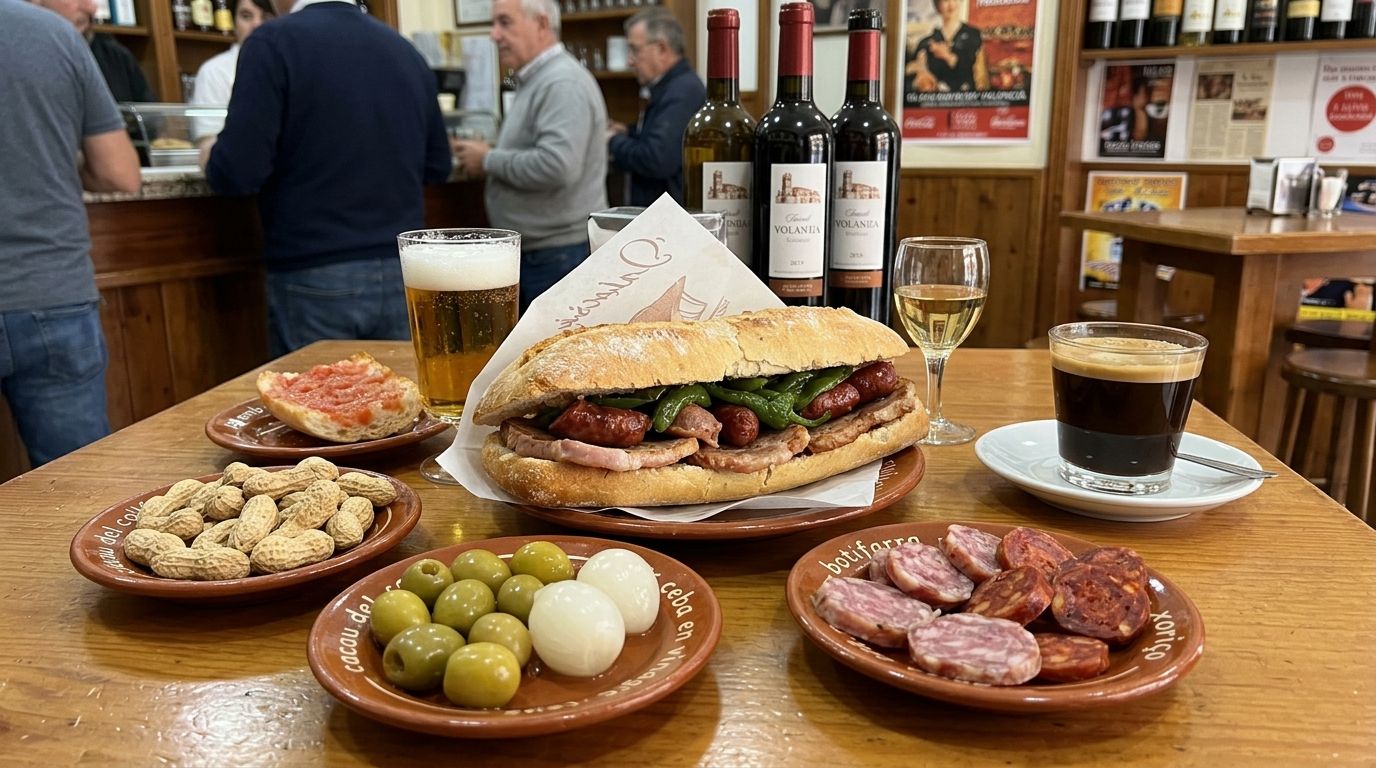
Valencians eat a light breakfast and then, between ten and eleven, stop for almuerzo (in Valencian, esmorzaret). It is a generous sandwich, on a long crusty roll, filled with anything from grilled meat and onions to omelet with peppers or black sausage. It comes with a small plate of peanuts and olives, a drink and, to finish, a cremaet: coffee with rum, sugar, cinnamon and lemon peel, flamed at the table.
The most famous address is Bodega La Pascuala in El Cabanyal, where the bocadillos are enormous. For a historic tavern with wine and small plates later in the day, Casa Montaña, in the same neighborhood, has been open since 1836.
Horchata and the sweet side
Horchata is the cold, pale milk of tiger nuts grown in Alboraya, just north of the city, drunk in the late afternoon with a soft pastry called a farton. Try it at Horchatería Santa Catalina or Horchatería El Siglo in the old town, or at Horchatería Daniel in Alboraya. Our guide to horchata in Valencia explains how to order it.
During the Fallas in March, the streets fill with stalls frying buñuelos de calabaza, pumpkin fritters, eaten with thick hot chocolate. All year, look for coca de llanda, a simple, soft sponge cake baked in a tray.
Regional produce, season by season
- Winter: oranges and mandarins at their best, artichokes, cauliflower, the hearty rices and stews.
- Spring: broad beans, peas, the first strawberries, and the artichokes still going.
- Summer: the famous Valencian tomato, ribbed and juicy, eaten with salt and oil; clóchinas; peppers and aubergines.
- Autumn: the grape harvest inland, persimmons from the Ribera del Xúquer, pomegranates, and the rice harvest in the Albufera.
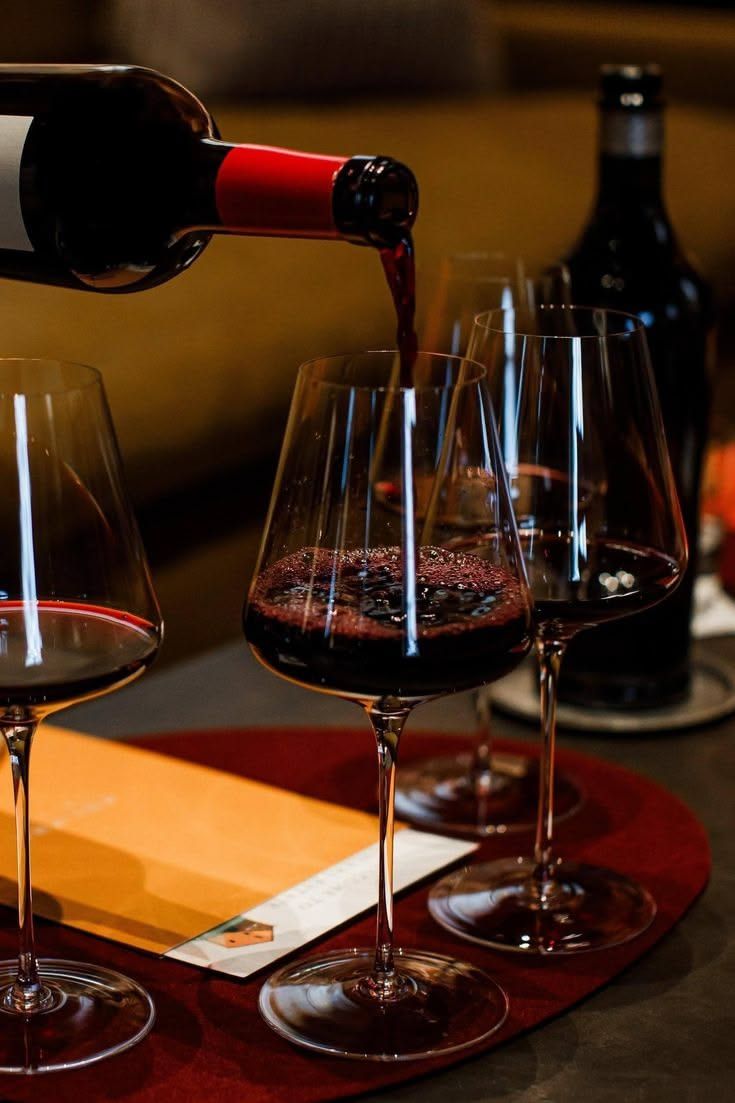
For wine, ask for Bobal, the red grape of Utiel-Requena on the plateau west of the city; our guide to Utiel-Requena wine explains where it grows and how to taste it.
Where to taste it all
At the market
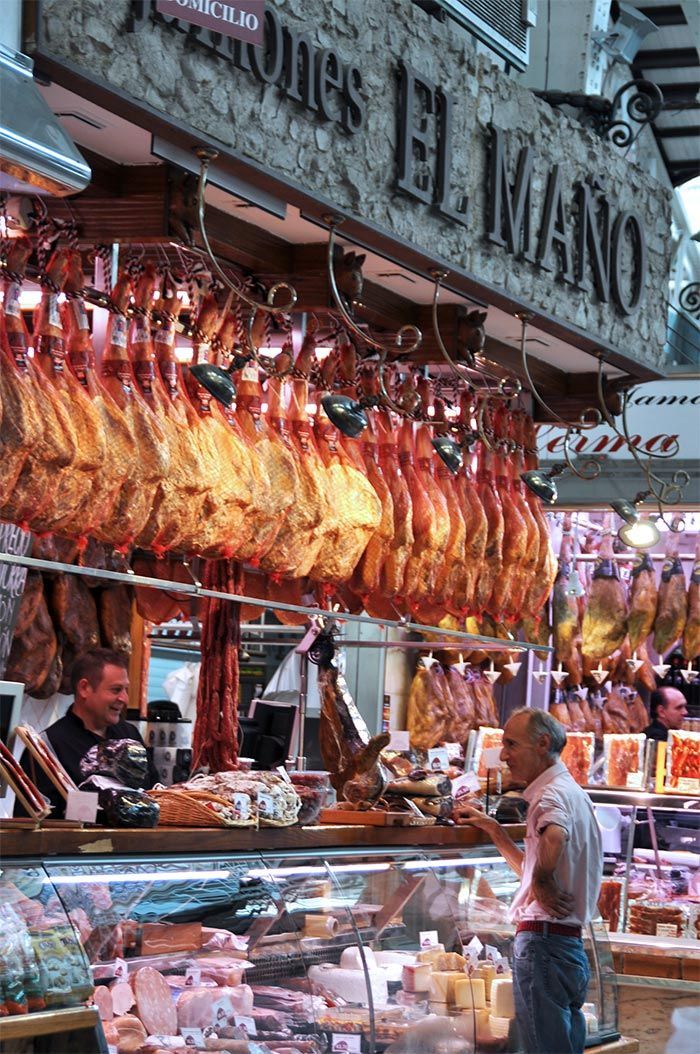
The Mercado Central is the best place to see these ingredients raw, and the counter of Central Bar, Ricard Camarena’s bar inside the market, is the place to taste them cooked, mid-morning. Our guide to the Mercado Central explains how to visit.
At the rice tables
For rice, Casa Carmela on the Malvarrosa beach, cooking over orange wood, and La Pepica on the Paseo de Neptuno, a historic seafront rice house, are classic choices for lunch. In the center, Casa Roberto in the Ensanche and Navarro near the Plaza del Ayuntamiento serve a broad range of rices.
In contemporary kitchens
Valencia’s best chefs reinterpret these dishes with precision. Ricard Camarena Restaurant builds its menus on vegetables from L’Horta; El Poblet, Quique Dacosta’s restaurant in the city, puts rice and the sea at the center; Kaymus is known for modern Valencian cooking with real attention to rice. For fish over fire, Llisa Negra in the Ensanche. Our guide to the best restaurants in Valencia lists more.
How to eat your way through Valencia
Eat rice at lunch, never at dinner. Stop for almuerzo at least once. Have horchata in the late afternoon. Ask what is in season and trust the answer.
On our private food tour, you taste many of these dishes in a single morning, from the market stalls to the bars locals use. A private paella class with our Local Hero, the arrocero of El Palmar, teaches you to cook rice the way the Albufera does. And for the end of a trip, our chef’s table experience shows how the city’s leading kitchens transform the same produce into a tasting menu.
For when to come, given what is in season, see the best time to visit Valencia.