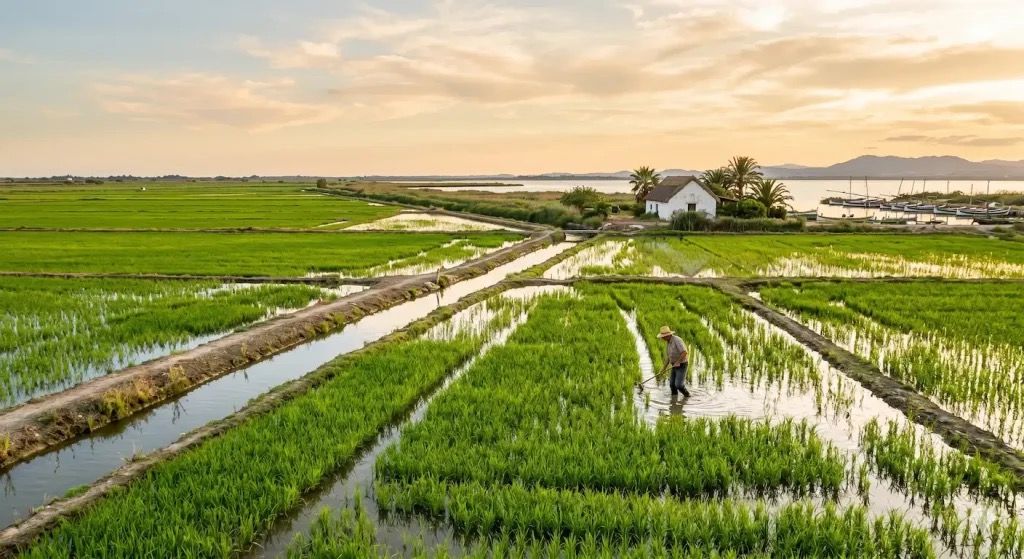
Arrocero, rice grower and paella cook
Gastronomy · Around 4 hours
Paella, cooked where it was born, by the people who grow the rice.
The experience
A morning in El Palmar, the village in the middle of the Albufera rice fields. An arrocero who has cooked rice all their life shows you how to make a true paella valenciana over an orange-wood fire, from the first sofrito to the socarrat, and then you sit down to eat it together.
Paella was born in the countryside around Valencia, cooked by farm workers in the open air with what they had to hand: rice from the fields, a chicken or rabbit, beans from the garden, and a fire of local wood. The most faithful place to learn it is still the rice fields, and El Palmar is the village at their heart, an island of houses and canals in the middle of the Albufera natural park.
A paella cooking class in Valencia can take place in many kitchens. This one takes place where the rice is grown, with an arrocero, a rice cook, who has made paella for family and neighbors all their life. You learn not only a recipe but the way of thinking behind it: the timing, the fire, the sound of the rice.
Your driver collects you from your hotel in the morning. Half an hour later, the city gives way to flat, open rice fields, flooded or green or gold depending on the season. On arrival, your arrocero takes you to the edge of the paddies to explain how rice is grown in the Albufera, and why the varieties grown here absorb flavor so well.
Back at the fire, everything is laid out. A paella valenciana has a short, firm list of ingredients: chicken, rabbit, ferraura (flat green beans), garrofó (large white lima beans), grated tomato, olive oil, sweet paprika, saffron, water, salt and rice. Some families add snails or a sprig of rosemary. Seafood, chorizo and peas do not belong here, and your arrocero will explain, with humor, why.
The paella is cooked over a fire of orange wood, as it traditionally is in this region. Orange wood burns hot and even, and gives a faint, sweet smoke. Learning to read and manage the fire is half the class: strong at the start to brown the meat, steady while the broth reduces, gentle once the rice goes in.
Step by step, you brown the meat, add the vegetables, the tomato and paprika, then the water and saffron. The broth is tasted and seasoned before the rice is scattered across the pan, never stirred again. Then you wait, listening, until the liquid is gone and the rice begins to crackle.
The socarrat is the thin, caramelized layer of rice that toasts at the bottom of the pan in the last minutes. It is the part Valencians fight over. Your arrocero shows you how to recognize it by sound and smell, and how to stop just before it burns.
The paella rests for a few minutes, and then you sit down to eat it together, in the Valencian way, straight from the pan. With it, a salad of the huerta, local wine and, to finish, something sweet and a coffee.
Anyone who loves to cook, or who wants to understand Valencia through its most famous dish. Families, since children enjoy the fire, the fields and the eating. Couples and small groups who prefer a relaxed, hands-on day to a formal class. No experience is needed.
The class pairs naturally with an Albufera boat tour, either before lunch or at sunset, for a full day in the natural park. It follows well after the Valencia food tour, where you will have seen the same ingredients at the market. And if you want to compare your paella with the city’s own, book a Sunday lunch by the sea at Casa Carmela, on the Malvarrosa beachfront, where paella has been cooked over orange wood since the 1920s, or at La Pepica on the Paseo de Neptuno. Our guide to the best restaurants in Valencia lists more. It is part of Valencia in 4 days, and your Private Valencia travel designer can fit it into any longer stay.
Local Heroes
Arrocero, rice grower and paella cook
Journeys that include it
For a long weekend
For first-time visitors
For slow travelers
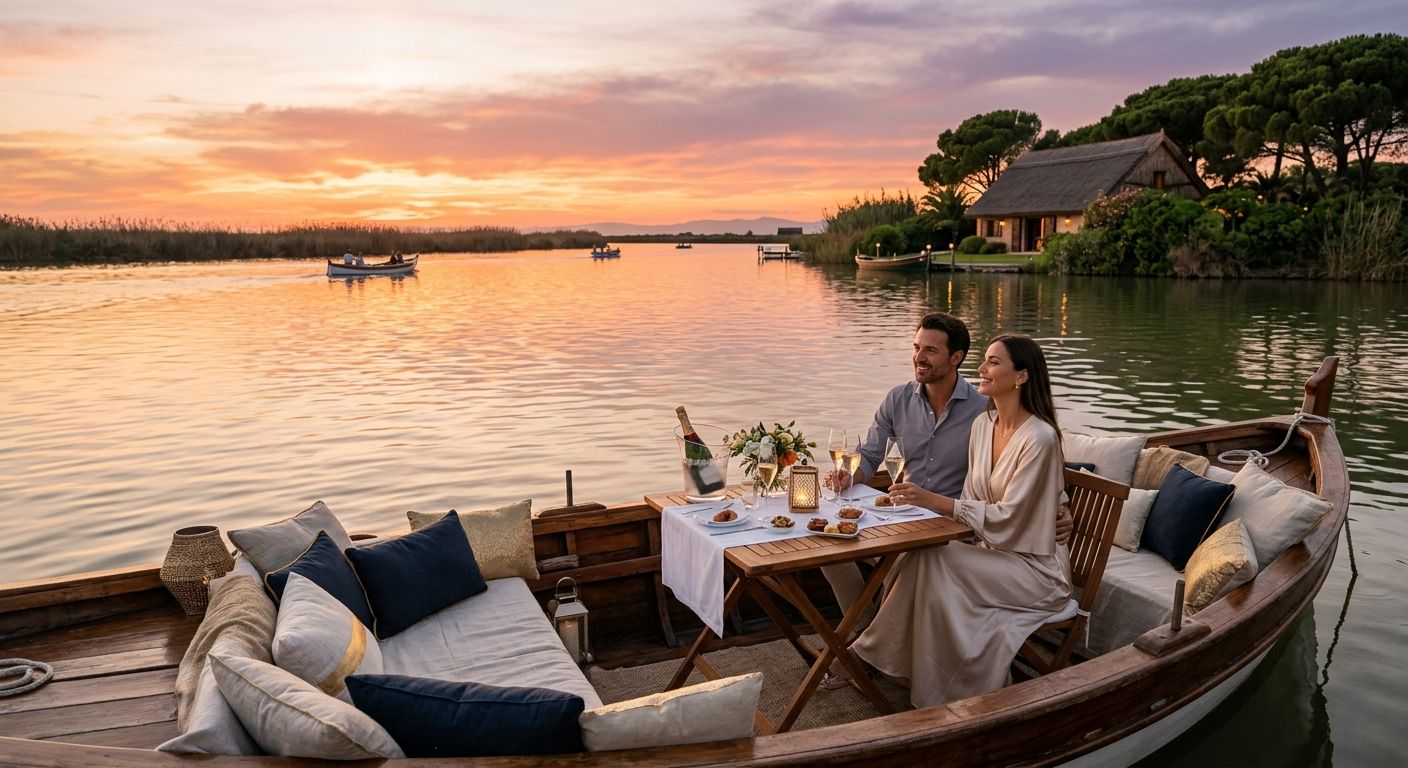
For honeymooners
From the journal
FAQ
Chicken and rabbit, flat green beans (ferraura), large white lima beans (garrofó), tomato, olive oil, sweet paprika, saffron, water, salt and rice. Some cooks add snails or a sprig of rosemary. Seafood belongs in other rice dishes, not in paella valenciana.
Yes. The class is private and hands-on, at whatever level you like. Children enjoy the fire and the rice fields, and there is plenty for them to do safely.
El Palmar is around 20 km south of Valencia, roughly half an hour by car. Your private driver collects you from your hotel and brings you back.
Yes. A vegetable paella of the huerta or an arroz de verduras can be cooked instead, with notice.
Yes, and it is the most natural pairing. A short boat trip on the lagoon can come before lunch, or later at sunset.
Private Valencia
Tell us who you are travelling with and what moves you. Your Private Valencia travel designer will come back with a first proposal, written for you alone.