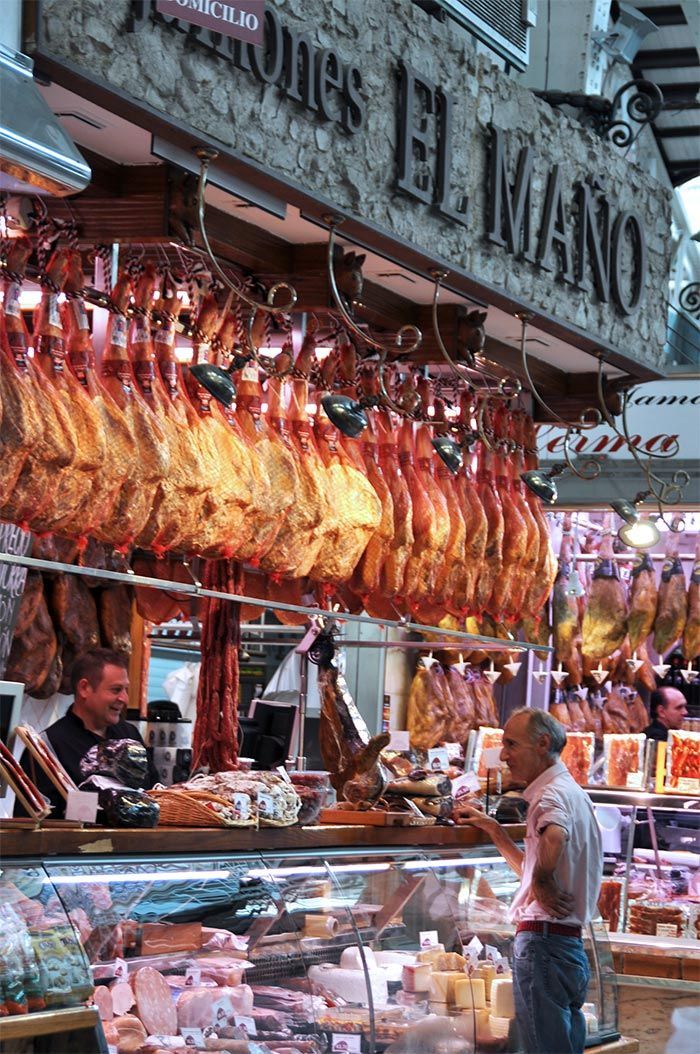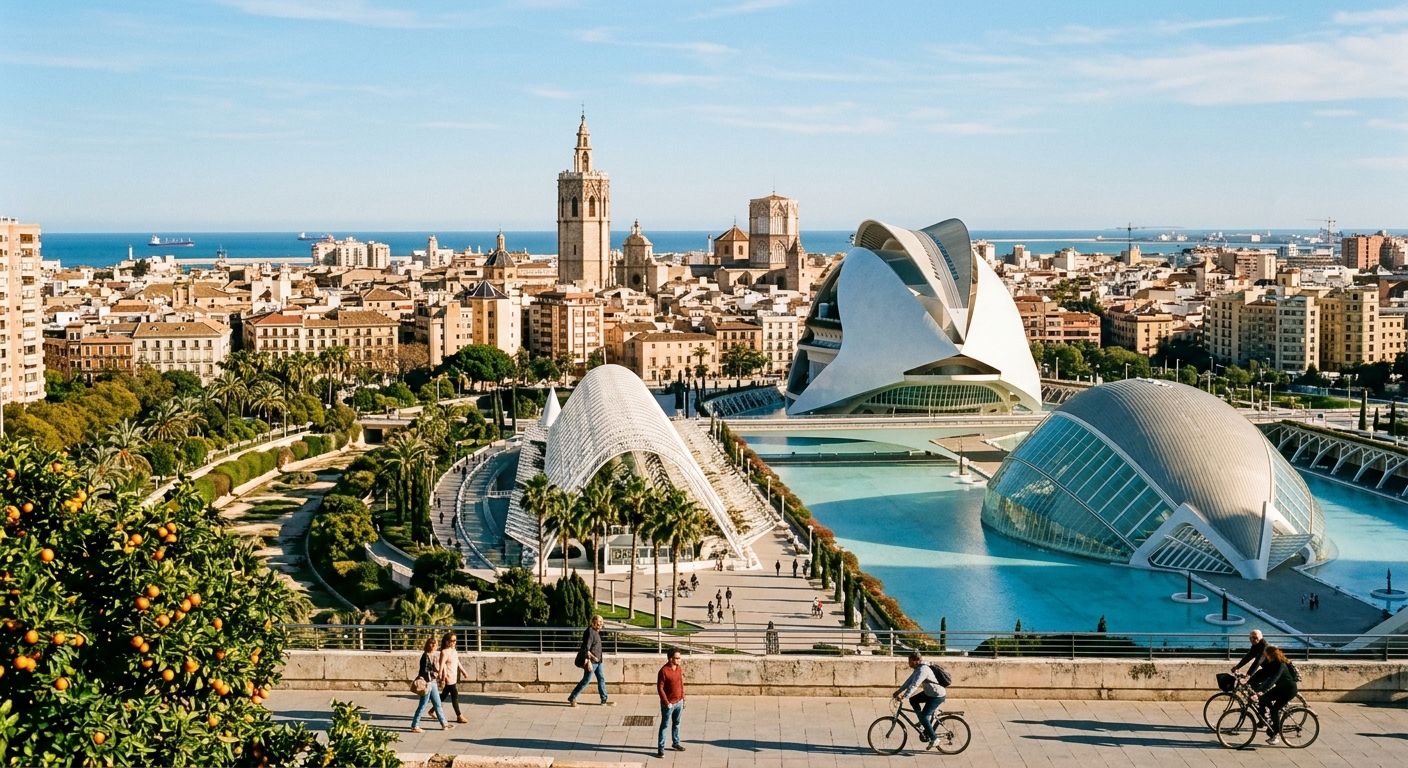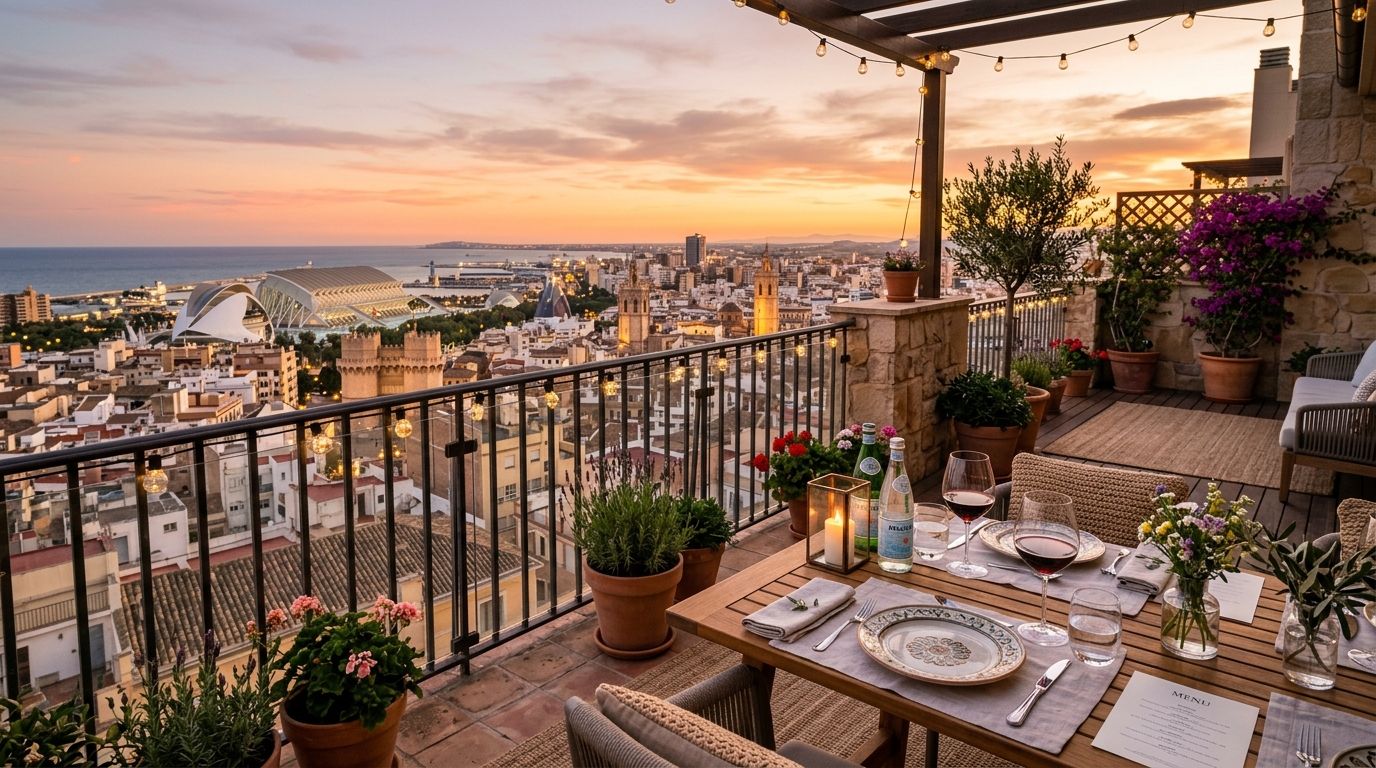
The Mercado Central in Valencia is where the city still does its shopping. Under a glass and iron dome in the old town, hundreds of stalls sell the fish of the Gulf of Valencia, the vegetables of the surrounding farmland, rice from the Albufera and hams that hang in rows above the counters. It is also one of the most beautiful markets in Europe, and a working one: come early and you will be shopping beside Valencian cooks and grandmothers, not just other visitors.
This guide covers the building, when to go, what to buy and where to eat, along with La Lonja, the Gothic silk exchange across the street.
The building
A modernist cathedral of food
The market was designed by the architects Alexandre Soler i March and Francesc Guàrdia i Vial, students of the Catalan modernist tradition. Work began in 1914 and the market opened in 1928. It covers roughly 8,000 square meters and holds around 300 stalls, which makes it one of the largest food markets in Europe still in daily use.
Look up as you walk in. The main dome and the smaller one over the fish hall are made of iron and glass, and the light falls straight onto the counters. Around the doors and windows, the walls are decorated with Valencian ceramic tiles showing oranges, lemons and leaves, and the stained glass repeats the theme. On top of the main dome, a metal weathervane in the shape of a parrot, la cotorra del Mercat, has become a small symbol of the city.
Two halls
The main hall holds meat, charcuterie, cheese, fruit, vegetables, rice, spices, olives and dried goods. The fish and seafood are sold in a separate, octagonal hall under the second dome, kept cool and wet. If you only have half an hour, walk the fish hall first, then the main aisles.
When to visit the Mercado Central
Opening hours
The market opens early in the morning and closes in the early afternoon, from Monday to Saturday. It is closed on Sundays and public holidays. Many stalls begin to pack up well before closing time, especially the fish.
The best time to go
- Early on a weekday, between eight and ten, is when the market belongs to Valencians. The fish is just out, the produce is stacked high and the aisles are calm.
- Saturday morning is the most lively, with families doing the weekly shop. Busy, but a real picture of the city.
- Late morning, from around eleven, brings the tour groups. Still worth it, but slower.
Mondays can be quieter for fish, since the boats do not go out on Sundays.
What to buy at the Mercado Central
To taste on the spot
- Jamón ibérico, sliced by hand and sold in paper cones at several charcuterie stalls.
- Fruit in season: cherries and apricots in early summer, persimmons in autumn, oranges and mandarins from late autumn through winter.
- Valencian tomatoes in summer, ribbed and irregular, sold by the kilo and better than they look.
- Fresh horchata from the stalls that make it; for the full story, read our guide to horchata in Valencia.
To take home
- Rice. Look for the DO Arroz de Valencia seal and varieties such as Bomba and Senia, the rices of paella. A cloth bag of Bomba packs well.
- Saffron, in small tins or envelopes. Buy it in threads, not powder, from a spice stall that will tell you where it came from.
- Salazones. Salt-cured fish, a Mediterranean tradition: mojama (cured tuna loin) and dried roe, sliced thin and vacuum-packed for travel.
- Olive oil, olives and pickles, from the stalls that sell dozens of varieties out of open barrels.
- Dried tiger nuts, if you want to try making horchata at home.
If you are flying home to the US, check the current rules on bringing meat products before buying ham to take with you.
For a kitchen
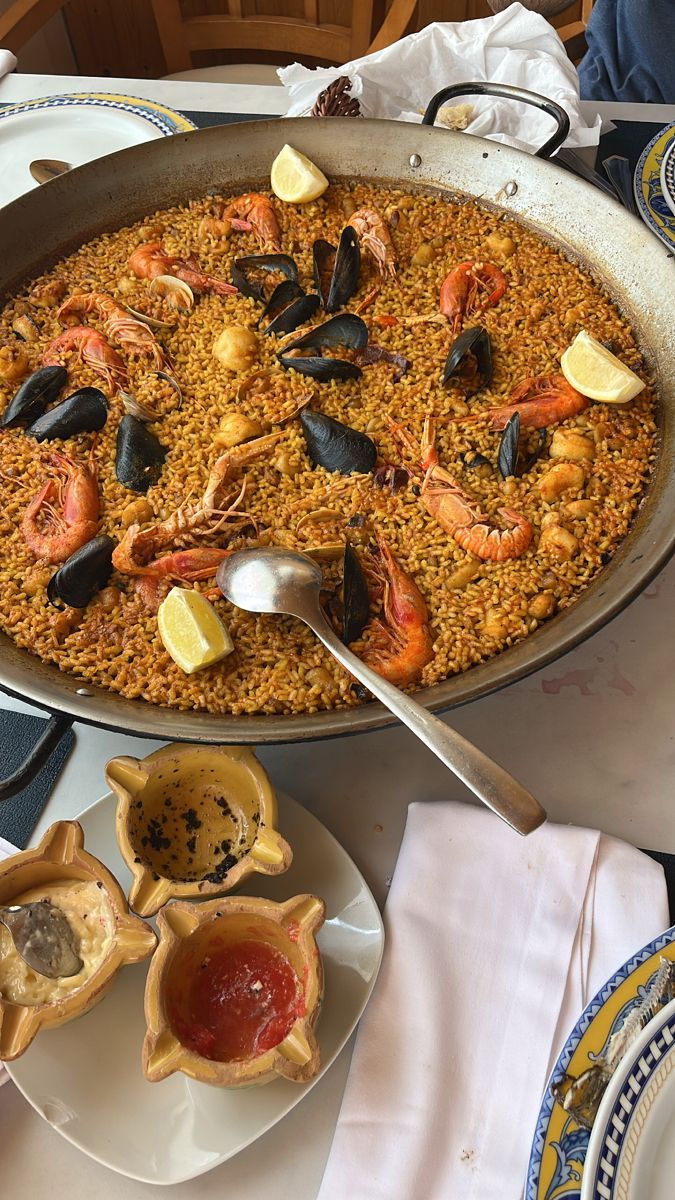
If you are renting a house, or taking a cooking class, the market is where to shop for the day. Ask for ferraura (flat green beans) and garrofó (large white lima beans) for paella valenciana, and for whatever the fishmonger recommends for a seafood rice. On our private paella class, the ingredients are part of the lesson; a morning at the market the day before makes the class far richer.
How to visit like a local
- Do not touch the produce. Point, and the stallholder will choose for you. They know what they are doing.
- Ask before photographing a stall up close. Most people say yes; it is a matter of courtesy at someone’s place of work.
- Bring a little cash for the smallest stalls, though most take cards.
- Say what you plan to cook, or when you plan to eat it. A good fishmonger or greengrocer will choose accordingly.
- Keep your bag closed in the busiest hours, as in any crowded place.
Where to eat at the Mercado Central
Central Bar
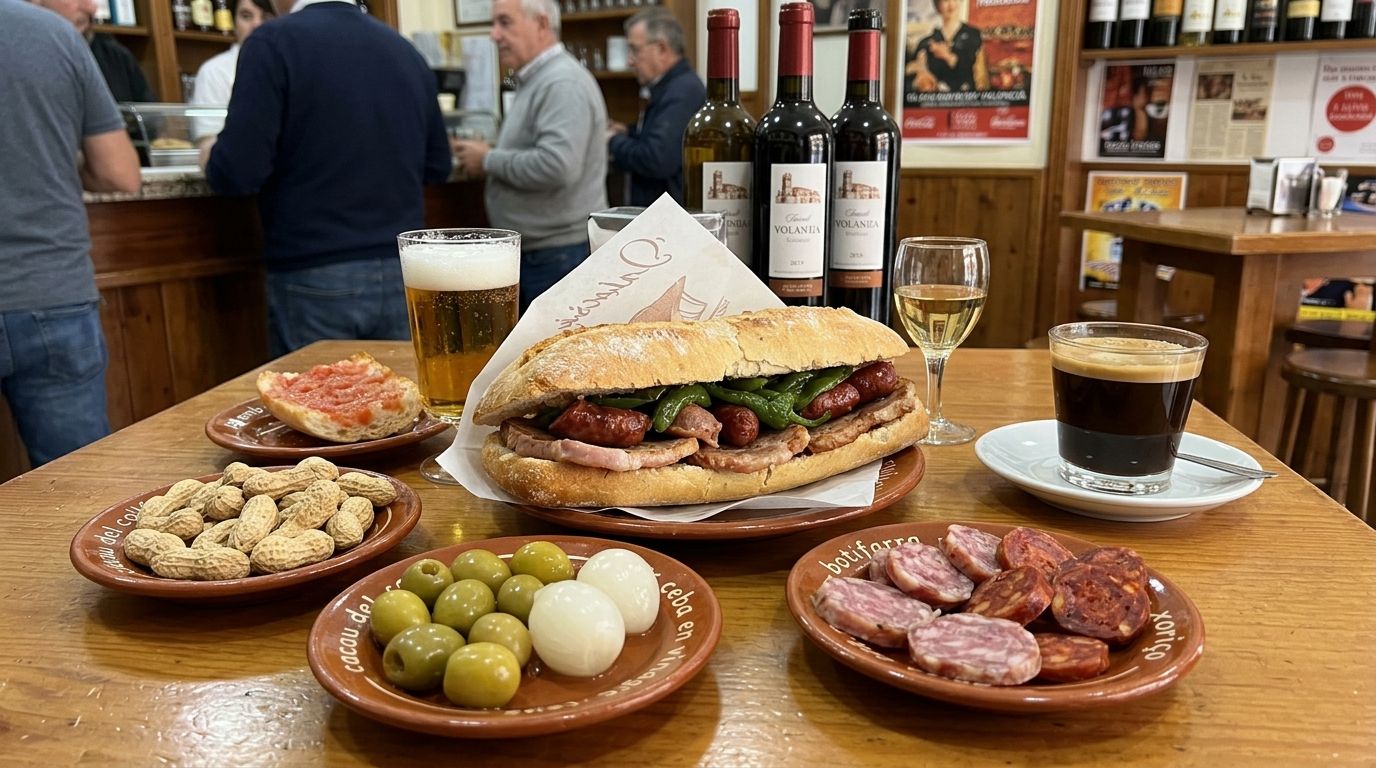
The counter to know inside the market is Central Bar, run by chef Ricard Camarena, whose flagship restaurant is one of the most admired in Valencia. It works like a classic market bar: you stand or perch at the counter, order a sandwich, a few small plates and a glass of something, and the cooking draws on what the stalls around you are selling. Arrive mid-morning to find space, and expect it to be full at lunch.
Nearby
Within a few minutes’ walk you will find the two historic horchaterías of the old town, Santa Catalina and El Siglo, for the afternoon. For rice, Navarro is a short walk away near the Plaza del Ayuntamiento, and Vuelve Carolina works for an informal dinner later. Our guide to the best restaurants in Valencia covers the wider neighborhood.
La Lonja, across the street
The silk exchange
Directly opposite the market stands La Lonja de la Seda, the silk exchange, built between 1482 and 1548 for the merchants who made Valencia one of the richest cities of the Mediterranean. It is a masterpiece of late Gothic civil architecture and a UNESCO World Heritage Site.
Inside, the trading hall, the Sala de Contratación, has slender twisted columns that open at the top like palm trees. There is a quiet courtyard of orange trees, and the carved gargoyles outside are full of strange and sometimes rude figures that reward a slow look. Allow 30 to 45 minutes.
The church of Santos Juanes
On the other side of the market, the church of Santos Juanes has a Baroque facade and a restored painted ceiling. Together, the market, La Lonja and the church make one of the richest corners of the old town, all within a few steps.
How the market fits into a private journey
Our private food tour usually begins here, early, with tastings along the aisles and a pause at the counter, before moving on to the bars that locals use. With a private guide, the morning extends into La Lonja, the cathedral and the old town, with the market as the delicious first chapter.
For the dishes you will see in raw form at the stalls, read our Valencia food guide. For the rest of the old town and beyond, see our list of things to do in Valencia.