Paella is the most famous dish in Spain and one of the most misunderstood. Authentic paella in Valencia is not a yellow rice heaped with seafood and chorizo, served at any hour on a terrace with photographs on the menu. It is a country dish from the rice fields south of the city, cooked in a wide, shallow pan over a fire, eaten at lunch, and argued about with great passion. This guide explains what it is, how to recognize a good one and where to eat it.
What is paella valenciana?
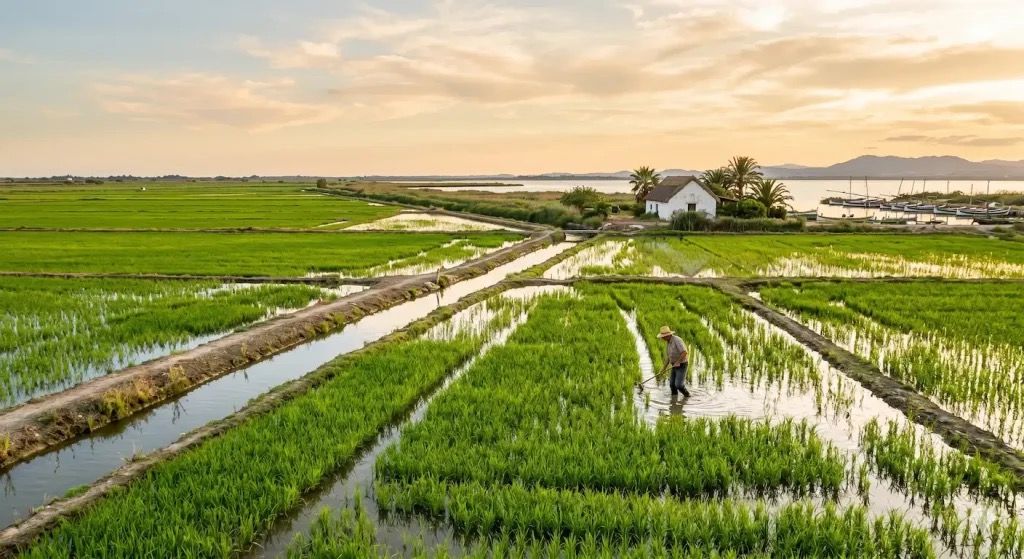
Paella is the Valencian word for the pan itself: wide, flat, with two handles. The dish took the name of the pan. It was born in the countryside around the Albufera lagoon, where farmers and rice workers cooked lunch in the fields with what they had at hand: rice, vegetables from the garden, a chicken or a rabbit, sometimes snails, and the wood of orange and vine prunings for the fire.
What Valencians call paella valenciana is that dish: a rice of meat and vegetables. Seafood rices are just as much a part of local cooking, but they are different dishes, with their own names.
The ingredients
The classic list is short, and every Valencian family defends its own version of it:
- Rice. A short, round grain that absorbs flavor without breaking. Valencian varieties such as Bomba, Senia and Albufera are grown around the lagoon under the designation of origin Arròs de València.
- Chicken and rabbit, cut into pieces and browned slowly in olive oil.
- Green beans, the flat ferraura, and garrofó, a large, flat white butter bean typical of Valencia.
- Tomato, grated, and sometimes a little sweet paprika.
- Saffron, for color and aroma.
- Water, salt and olive oil.
Snails, or a sprig of rosemary laid on the rice at the end, are traditional in many homes. Artichokes appear in winter.
What never goes in
Chorizo, onion, peas, peppers and a mix of meat and seafood are the classic objections. A “mixed paella” exists on many menus for visitors, but you will rarely see a Valencian order one. None of this is a law, but if you see these ingredients in a “paella valenciana”, you are not eating the local dish.
The socarrat: the best part of the pan
A good paella has a thin, even layer of rice. In the last minutes of cooking, the heat is raised and the grains at the bottom caramelize against the pan into a crisp, toasted crust. That crust is the socarrat, and for many Valencians it is the best part of the dish.
You can hear it before you see it: a soft crackle when the liquid has gone. You find it by scraping the bottom of the pan with your spoon. It should be golden and crunchy, never black or bitter.
Other signs of a good paella
- The rice is dry and loose, each grain separate, never creamy like a risotto.
- The layer is thin, often no deeper than a finger, so the rice cooks evenly.
- It was cooked to order. A good paella takes at least twenty minutes, often longer. If yours arrives five minutes after you order, it was not made for you.
- It rests briefly before serving, so the rice settles.
How Valencians eat paella
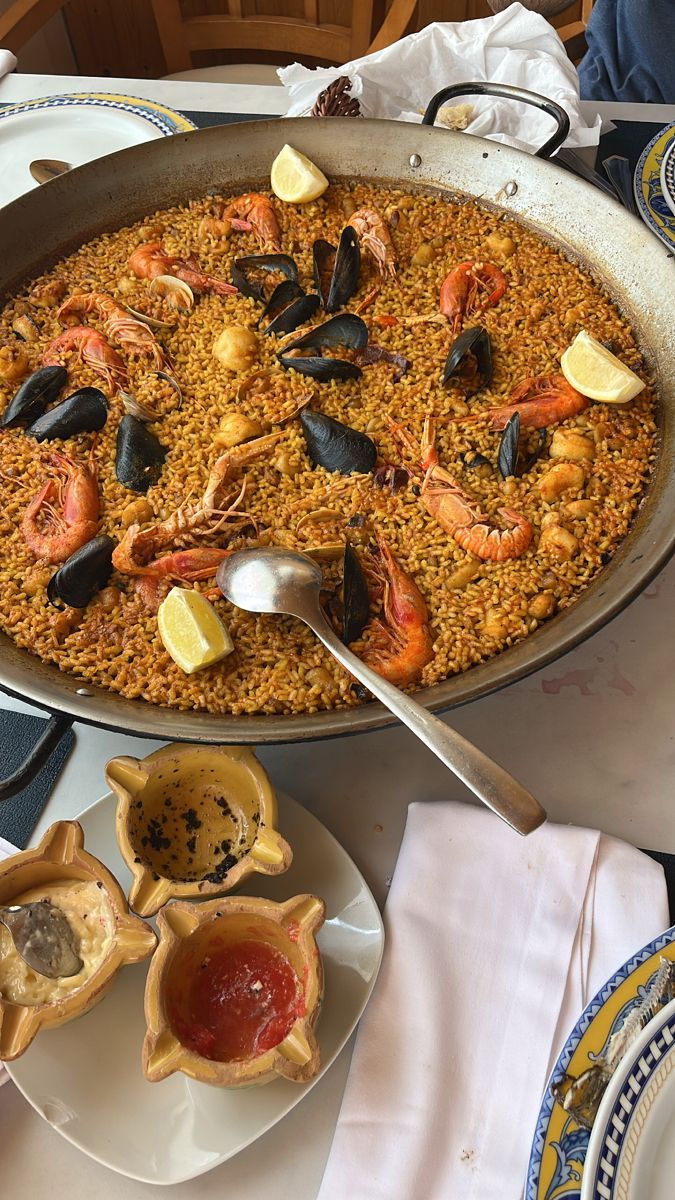
Paella is a lunch dish, and Sunday lunch is its natural home. Families and friends gather around one pan, set in the middle of the table, and many still eat straight from it, each person working their own section toward the center. Lemon wedges are common on seafood rices; on a paella valenciana many locals consider them unnecessary.
Dinner paella is, for most Valencians, a sign that a restaurant is cooking for visitors. Lunch is usually served between 2 and 4 pm.
Beyond paella: the other Valencian rices
Valencia has dozens of rice dishes, and many local cooks would say they eat paella valenciana less often than these:
- Arroz a banda, rice cooked in a rich fish stock, served with allioli.
- Arroz negro, black with squid ink.
- Arroz del senyoret, a seafood rice with everything already peeled.
- Arroz al horno, baked in a clay dish with pork, chickpeas and morcilla.
- Fideuà, made with short noodles instead of rice, from the coast south of Valencia.
The seafood paella in the photograph above belongs to this wider family: delicious, but not a paella valenciana.
Common mistakes to avoid
- Eating paella at dinner. Book it for lunch.
- Choosing by the picture menu. Photographs of every dish, a waiter calling from the door and a paella served in minutes are three warning signs on one terrace.
- Ordering for one. Most good rice houses cook for a minimum of two people, because a paella is made in one pan for the table.
- Arriving late without a booking. The best places fill at weekend lunch. Book ahead.
- Stirring, or expecting it creamy. Paella is left alone once the rice is added. A creamy rice is a different dish, the arroz meloso, and also very good.
Where to eat authentic paella in Valencia
These are places worth knowing. Check opening days before you go; many rice houses close in the evening and on one or two days a week.
By the sea
- Casa Carmela, on the Malvarrosa beachfront, cooks paella over orange wood and has done so since the 1920s. Book well ahead for weekend lunch.
- La Pepica, on the Paseo de Neptuno, is a historic rice house facing the beach, best for seafood rices.
In the city
- Casa Roberto, in the Ensanche, is a classic city rice restaurant.
- Navarro, a few steps from the Plaza del Ayuntamiento, is practical after a morning in the old town.
- Kaymus, in the northern districts, is a modern Valencian kitchen with a strong hand for rice.
For the full list, see our guide to the best restaurants in Valencia.
At the source: El Palmar
The village of El Palmar, on an island in the Albufera, lives from rice and almost every door seems to belong to a restaurant. Quality varies widely. Look for a family-run house that cooks to order, ideally over wood, with a short menu of rices and a dining room full of Valencians at Sunday lunch. Pair the meal with a private Albufera boat tour at sunset, and read our guide to the Albufera before you go.
Learn to cook it yourself
The surest way to understand paella is to cook one. On our private paella class, you cook with the arrocero of El Palmar, our Local Hero, who has spent their life among the rice fields. You build the fire, brown the meat, measure the water by eye, and learn to listen for the socarrat. Then you sit down and eat what you made, at lunch, as it should be.
If you would rather taste than cook, our private food tour begins at the Mercado Central, where the rice, the beans and the saffron are sold, and explains how the dish comes together stall by stall. Both fit easily into a three-day journey in Valencia.
Frequently asked questions
Is paella from Valencia?
Yes. Paella was born in the rice-growing countryside around the Albufera, south of the city, and Valencia remains its home.
What is the difference between paella and arroz?
In Valencia, paella usually means paella valenciana, the dish of chicken, rabbit and vegetables. Most other rice dishes, including seafood ones, are called arroz followed by their name.
Can I find a good paella in the evening?
Some good restaurants serve rice at dinner, but paella is at its best at lunch, when it is cooked with time and care for tables that have come for it.