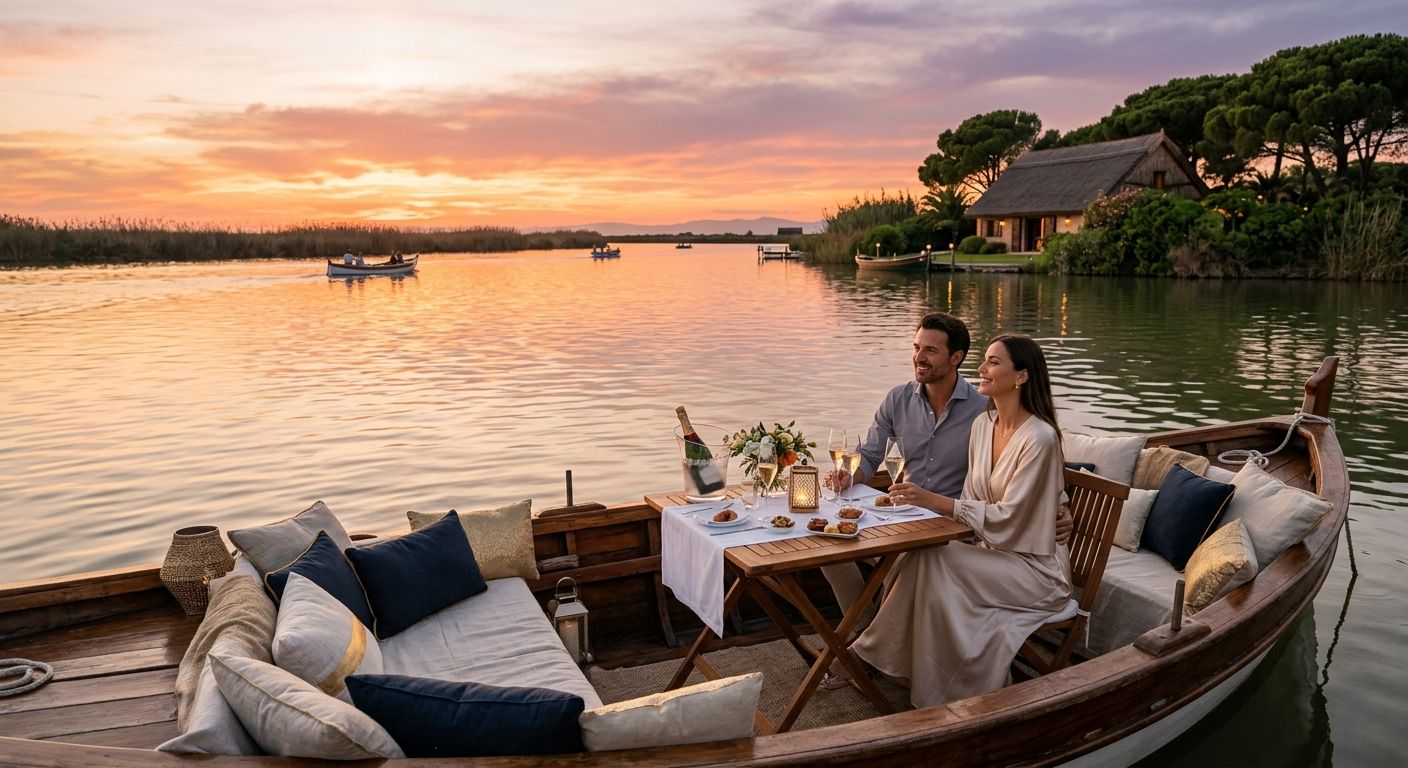
Twenty minutes south of the city, the noise of Valencia gives way to water, reeds and rice. The Albufera is a large freshwater lagoon separated from the sea by a narrow strip of dunes and pine forest, and surrounded by the rice fields that gave the world paella. For anyone visiting Valencia, it is the most beautiful short escape from the city, and at sunset it is quietly spectacular. This guide explains what the Albufera is, how its year works, and how to visit it well.
What is the Albufera?
The name comes from the Arabic al-buhayra, “the little sea”. The lagoon is one of the largest in Spain, shallow, fed by irrigation channels and connected to the Mediterranean through a few sluice gates. Around it, the Albufera Natural Park protects the lagoon, the rice fields and the coastal forest of La Devesa, a landscape of pines and dunes between the water and the beach.
It is a working landscape, not a wilderness. Farmers grow rice, fishermen still set traps for eels and mullet, and families from the villages around the lagoon have lived from both for centuries.
El Palmar: the village of rice
El Palmar is a small village on an island inside the park, reached by a road across the fields. It has a single main street, a handful of canals with moored boats, and more rice restaurants than seems possible for its size.
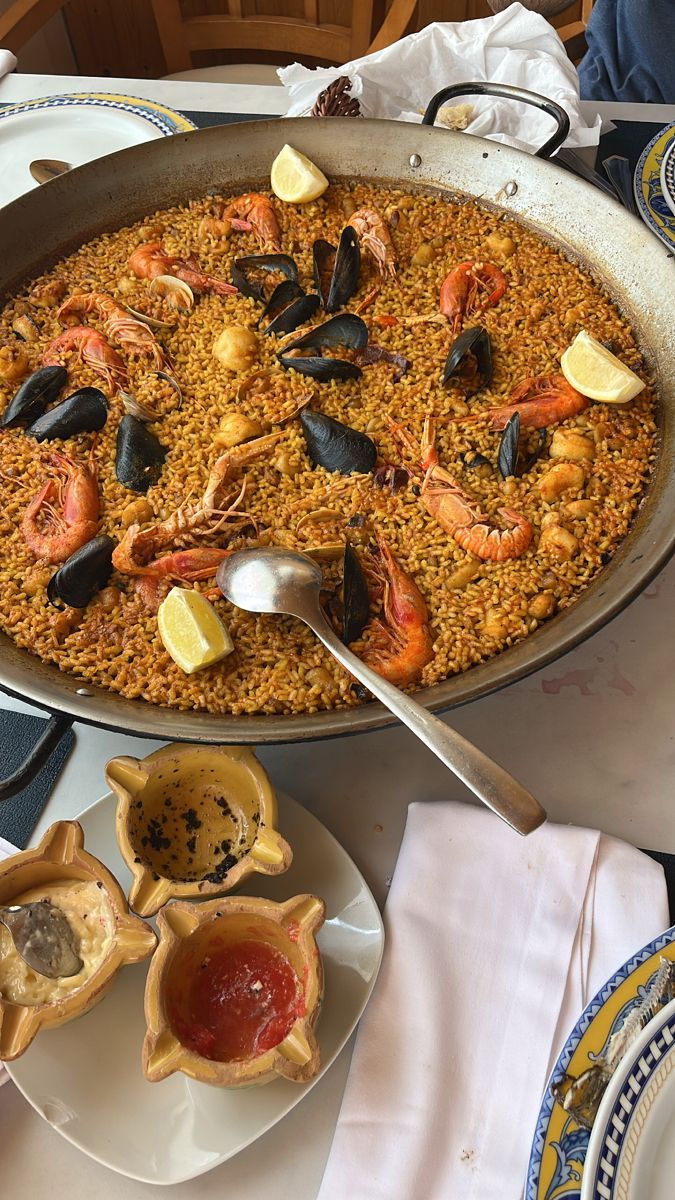
It is the place to try two local dishes at their source: paella valenciana, cooked over wood, and all i pebre, a stew of eel with garlic, paprika and potatoes that belongs to the lagoon. Quality varies, so look for a family-run house that cooks every rice to order. Our guide to authentic paella in Valencia explains what to look for.
The rice year
The Albufera changes completely from one season to the next, and the rice decides the calendar.
Spring: flooding and sowing
In spring the fields are prepared and flooded, and the rice is sown, usually around May. For a few weeks the whole plain becomes a mirror of water and sky.
Summer: green fields
Through June, July and August the rice grows, and the landscape turns an intense green. It is hot, and mosquitoes can be lively at dusk, but the light at sunset is long and golden.
Autumn: the harvest
The harvest usually runs from September into October. The fields turn gold, then are cut, and the stubble is left behind. This is the season when the new rice reaches the kitchens.
Winter: the perellonà
After the harvest, many fields are flooded again for the winter, a practice known as the perellonà. The water draws thousands of wintering birds, and the plain becomes a vast, shallow lake under low winter light. For many locals this is the most beautiful time of the year here.
Birds of the Albufera
The Albufera is one of the most important wetlands on the Spanish Mediterranean for birds, both breeding and wintering. Even without binoculars, you will see herons, little egrets and cormorants along the channels, and in the right season terns, gulls and ducks over the open water. Flamingos are sometimes seen.
Early morning and late afternoon are the best times. The Racó de l’Olla, a protected area with a visitor center and an observation tower near El Palmar, is a good place to start.
The boats
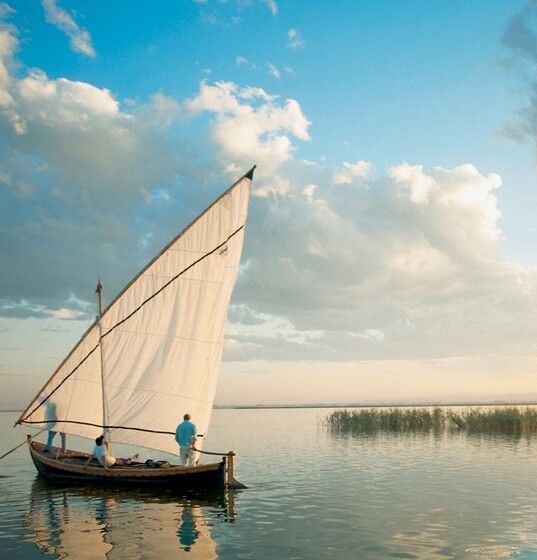
The traditional boat of the Albufera is a flat-bottomed wooden craft, built to move through shallow water. Some are pushed along with a long pole; others carry a single triangular lateen sail, the image of the lagoon you will see on postcards and in old paintings.
Public boat rides leave from El Palmar and from small landing stages around the lagoon. They are short and often shared. The difference with a private boat is time and silence: you set the pace, go out at the right moment for the light, and stay on the water as the sun goes down.
The Albufera at sunset
The sunset is the reason most people come. The sun goes down over the lagoon, behind the mountains to the west, and on a clear evening the water turns pink, then orange, then silver. The best views are from the water itself, or from the landing stages on the western side of the lagoon.
Our private Albufera boat tour is timed for this moment: around two hours on a traditional boat with a local boatman, ending as the light fades. It is one of the moments couples remember most from our Valencia honeymoon.
How to visit the Albufera
Getting there
El Palmar is about 15 to 20 kilometers south of central Valencia, a drive of roughly twenty to thirty minutes. There is a public bus from the city, but services are limited, especially in the evening. With a driver, you can combine the lagoon, lunch and the beaches of El Saler in one easy half day.
When to go
Any season works, each for a different reason: green fields in summer, gold in early autumn, water and birds in winter. Spring and autumn are the most comfortable. Avoid weekend lunch in El Palmar if you dislike crowds, or book well ahead. For the year in the city as a whole, see the best time to visit Valencia.
What to bring
Comfortable shoes, a light layer for the evening on the water, and insect repellent from late spring to early autumn.
How long to stay
A half day is enough to see the lagoon and eat well. A full day lets you add a walk through the pine forest of La Devesa and an afternoon on the beach.
A perfect Albufera day
Here is how we like to plan it:
- Late morning: drive south through the rice fields to El Palmar.
- Midday: cook a paella over wood with the arrocero of El Palmar, our Local Hero, on our private paella class, then sit down to lunch.
- Afternoon: a slow walk in La Devesa, or a rest by the sea at El Saler.
- Sunset: board a private boat for the last light on the lagoon.
- Evening: back in the city in time for a late dinner.
This day fits naturally into a four-day journey in Valencia, and pairs well with our guide to things to do in Valencia.
Frequently asked questions
Is the Albufera worth visiting?
Yes. It is close, easy and completely different from the city, and it explains much of Valencia’s cooking.
Can you swim in the Albufera?
No. The lagoon is shallow and protected. The beaches of El Saler, a few minutes away, are where to swim.
How long is a boat ride on the Albufera?
Public rides are usually short. A private boat at sunset lasts around two hours.