For a few days every March, Valencia gives itself over to fire. Hundreds of giant sculptures appear overnight in its streets and squares, gunpowder shakes the city every afternoon, bands play from morning to night, and on the last evening almost everything is burned. The Fallas in Valencia is one of the most extraordinary festivals in Europe, and one of the most overwhelming. This guide explains what happens, when, and how to enjoy it well.
What are the Fallas?
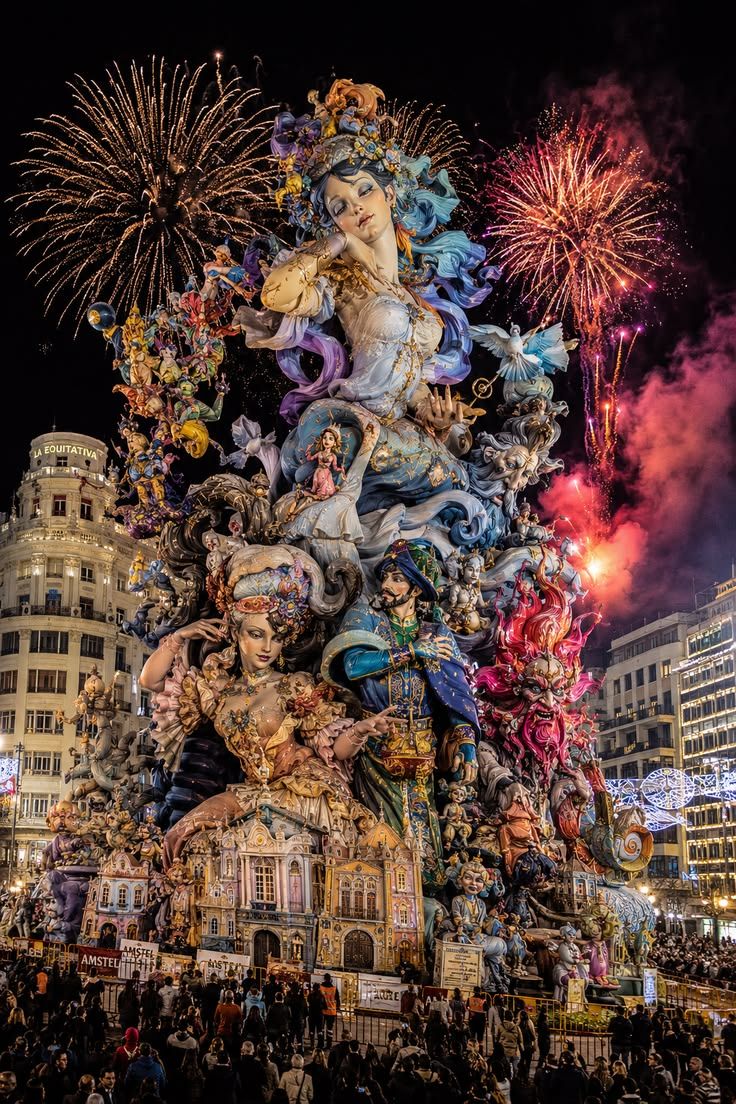
The Fallas is Valencia’s great festival in honor of Saint Joseph, the patron saint of carpenters. Each neighborhood has its own falla association, a community of falleros who spend the whole year raising money and commissioning a monument. During the festival those monuments, also called fallas, stand in the streets: towering compositions of painted figures, often satirical, built by master craftsmen over many months.
On the night of 19 March, they are set on fire.
The festival was inscribed by UNESCO on the Representative List of the Intangible Cultural Heritage of Humanity in 2016.
A short history
The most common story traces the Fallas to the city’s carpenters. At the end of winter, on the eve of Saint Joseph’s day, they would burn the wooden stands that had held their lamps during the dark months, along with scraps of wood from their workshops. Over time, neighbors began to dress these bonfires with old clothes and figures that mocked local characters. By the 18th century, the city was regulating them; by the 20th, they had grown into the monumental art of today.
The satire remains. Many fallas still poke fun at politicians, celebrities and the news of the year, and reading them is part of the pleasure.
When are the Fallas?
The main days of the Fallas run from 15 to 19 March every year. The festival builds for weeks before:
- The Crida, the official opening, takes place on the last Sunday of February at the Torres de Serranos.
- The daily mascletà in the town hall square begins on 1 March.
- The plantà, when the monuments are raised in the streets, happens on the night of 15 March.
- The Ofrenda, the flower offering to the Virgin, fills 17 and 18 March.
- The cremà, the burning, is the night of 19 March.
Because 19 March can fall on any day of the week, the busiest days shift from year to year. Weekends are the most crowded.
What to see during the Fallas
The monuments
There are hundreds of fallas, large and small, across the city, each with a children’s falla nearby. The most ambitious are in the Sección Especial, the top category, whose monuments can rise as high as a building and take a year to make. They are judged, and prizes are announced on 16 March.
The best way to see them is to walk between them, ideally with someone who can explain the satire and the craft. A private guide can plan a route through the finest monuments while avoiding the worst of the crowds, early in the morning or late at night.
The ninots
Each falla is made up of individual figures called ninots. Before the festival, one ninot from each falla is shown in the Ninot Exhibition, and the public votes for a favorite. The winning ninot, the ninot indultat, is “pardoned” and saved from the flames; it joins the collection of the Fallas Museum, where pardoned ninots from past decades can be seen all year.
The mascletà
At 2 pm every day from 1 to 19 March, a mascletà is fired in the Plaza del Ayuntamiento. It is not a fireworks show to watch so much as one to feel: several minutes of rhythmic, ever-louder detonations that build to a final earthquake of sound. The ground shakes, the air fills with smoke, and the square erupts in applause.
The square is packed for hours beforehand, and the crush can be intense. This is why we arrange a private balcony above the square, with space, drinks and a perfect view.
The Ofrenda
Over two days, tens of thousands of falleros in traditional dress walk in procession to the Plaza de la Virgen, each carrying flowers. Their bouquets are used to dress a huge wooden figure of the Virgin of the Forsaken, whose cloak becomes a tapestry of carnations. It is the gentlest and most moving part of the festival, and the costumes, with their silk, lace and gold, are remarkable.
The night fireworks
On several nights, fireworks are fired over the old riverbed of the Turia, culminating in the Nit del Foc, the Night of Fire, in the early hours of 19 March.
The cremà
On the night of 19 March, the fallas burn. The children’s fallas go first, in the evening, then the large monuments around midnight, and finally the falla in the town hall square. Firefighters stand by and spray the buildings around them. To watch a monument a year in the making go up in flames, with the heat on your face, is thrilling for some and unsettling for others. Both reactions are reasonable.
Eating during the Fallas
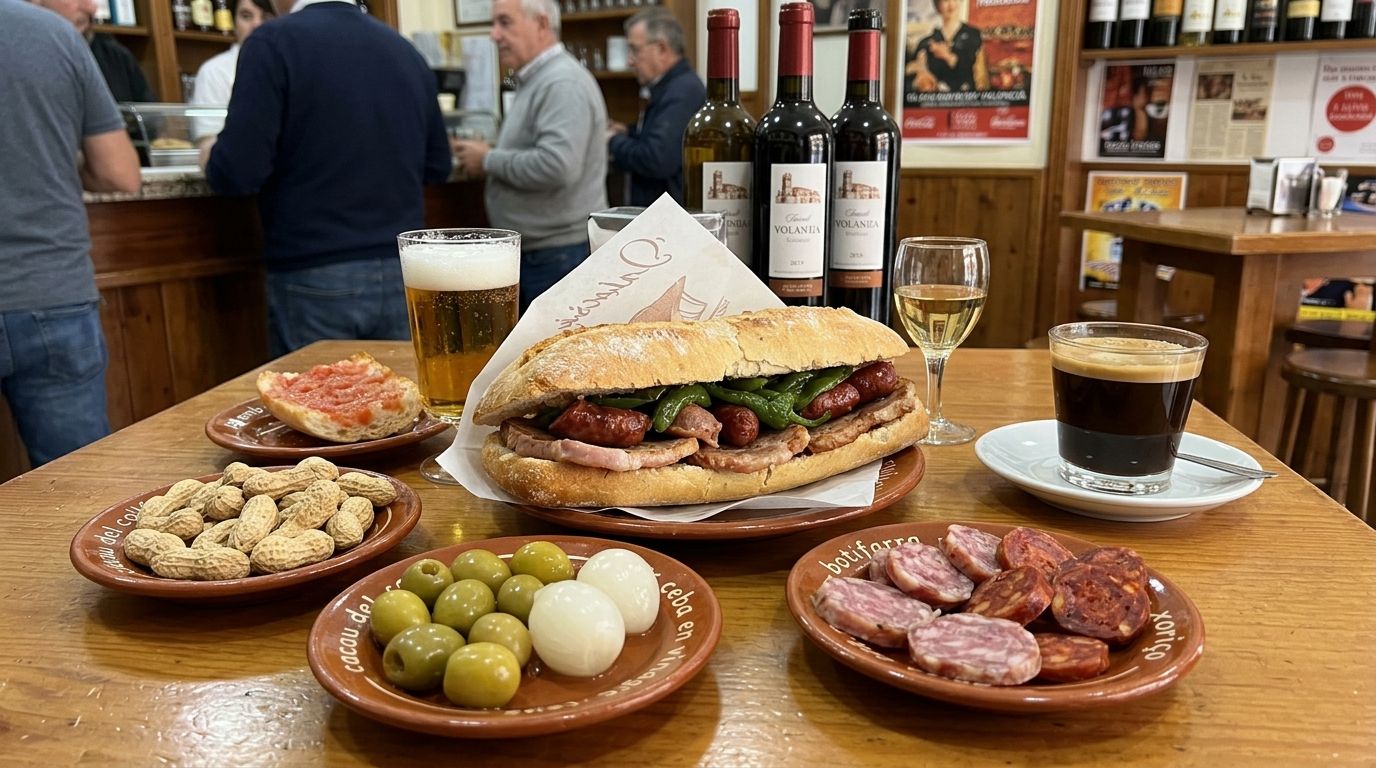
The Fallas has its own food. The most famous are buñuelos de calabaza, pumpkin fritters dipped in thick hot chocolate, sold from stalls all over the city. Each falla association also cooks huge paellas in the street for its members. Restaurants are full for the whole festival, so book well in advance, and expect some to close for the week. For more, see our guide to the best restaurants in Valencia.
Practical tips for surviving the Fallas
Book early
Hotels, especially in the center, fill months ahead and rates are at their highest of the year. If you want to stay near the action, plan as far ahead as you can; for the most central rooms, the autumn before is not too early. See our guide to where to stay in Valencia for the trade-offs between quiet and convenience.
Expect noise, all the time
Firecrackers go off from morning to the early hours. At eight in the morning, the despertà, the “wake-up call,” marches through the streets with firecrackers. Bring earplugs, and if you are sensitive to noise, choose a hotel on a quiet street or outside the center.
Plan to walk
Much of the city center is closed to traffic, and taxis are hard to find. The metro runs, but stations near the main square can close when crowds are heavy. Wear comfortable shoes and dress in layers; the days can be warm and the nights cool.
Keep it simple in crowds
Carry little, keep your phone in a front pocket, and agree a meeting point if you are in a group. With children, the morning hours and the smaller neighborhood fallas are more relaxed than the main square.
Know when to step away
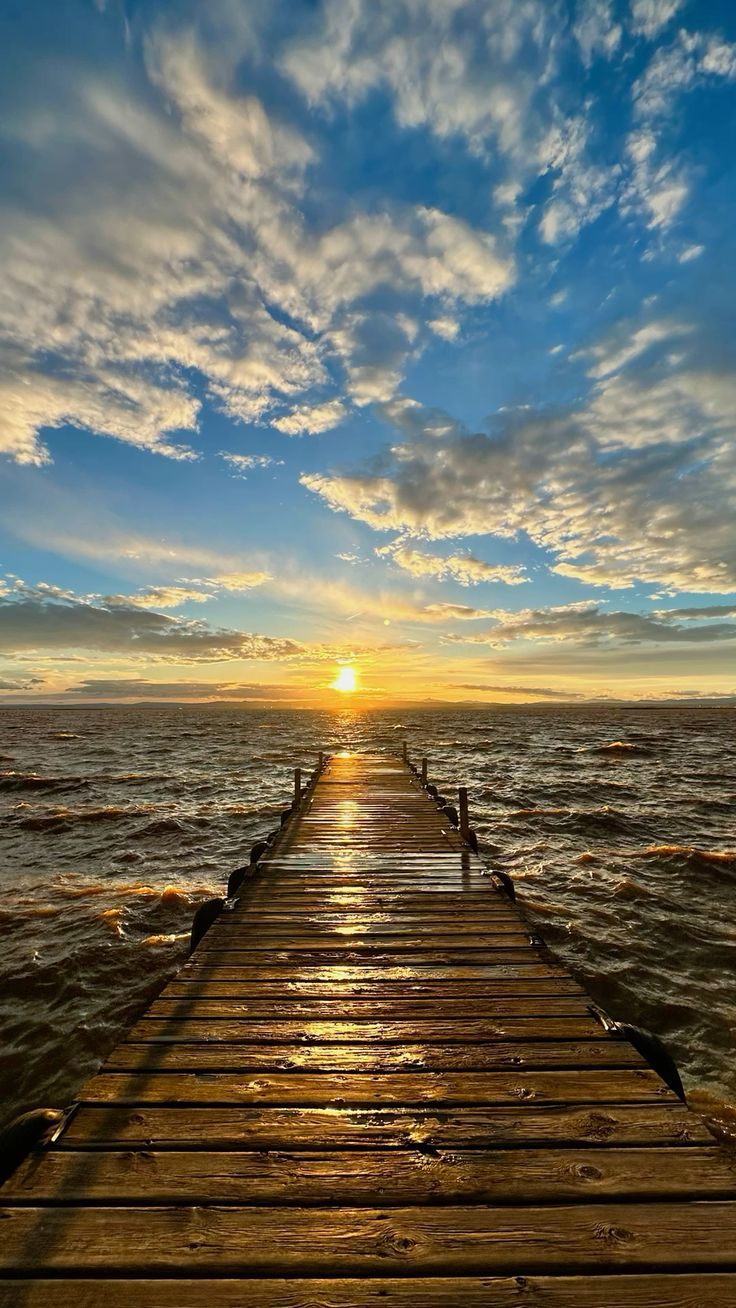
The Fallas is intense. Many visitors enjoy two or three days in the city, then retreat to the countryside or the coast. An afternoon in the Albufera, or a day trip to Altea, makes a welcome pause.
How to enjoy the Fallas privately
The Fallas is a public festival, open to everyone in the street, and that is part of its magic. But the crowds make it hard to see the best moments well. A private approach changes the experience:
- A balcony for the mascletà, above the town hall square, where you can watch and feel it in comfort. This is the heart of our Fallas VIP experience.
- A guided walk through the finest monuments at the quietest hours, with someone who can explain the satire and the craft.
- A private driver to take you in and out of the center when the streets close.
- A table reserved for lunch and dinner, when the city’s restaurants are booked solid.
- Time away from the noise: a day in wine country or by the sea.
We usually build the festival into a short journey, such as our four-day journey, adapted to the dates of the Fallas. If you are deciding when to visit, our guide to the best time to visit Valencia explains how March compares with the rest of the year.
Your Private Valencia travel designer can tell you which days suit you best, reserve the balcony and the tables, and plan the quiet moments around the fire.